

Posted
Rider fit guide · Long riding boots
Tall riding boots should feel close through the foot and calf, secure at the ankle and tall enough to settle into a clean line.
A well-chosen pair should support your lower leg without becoming a distraction. This Premier Equine guide explains how to measure calf width and boot height, what the first fit should feel like and how leather riding boots change as they begin to mould around the ankle.
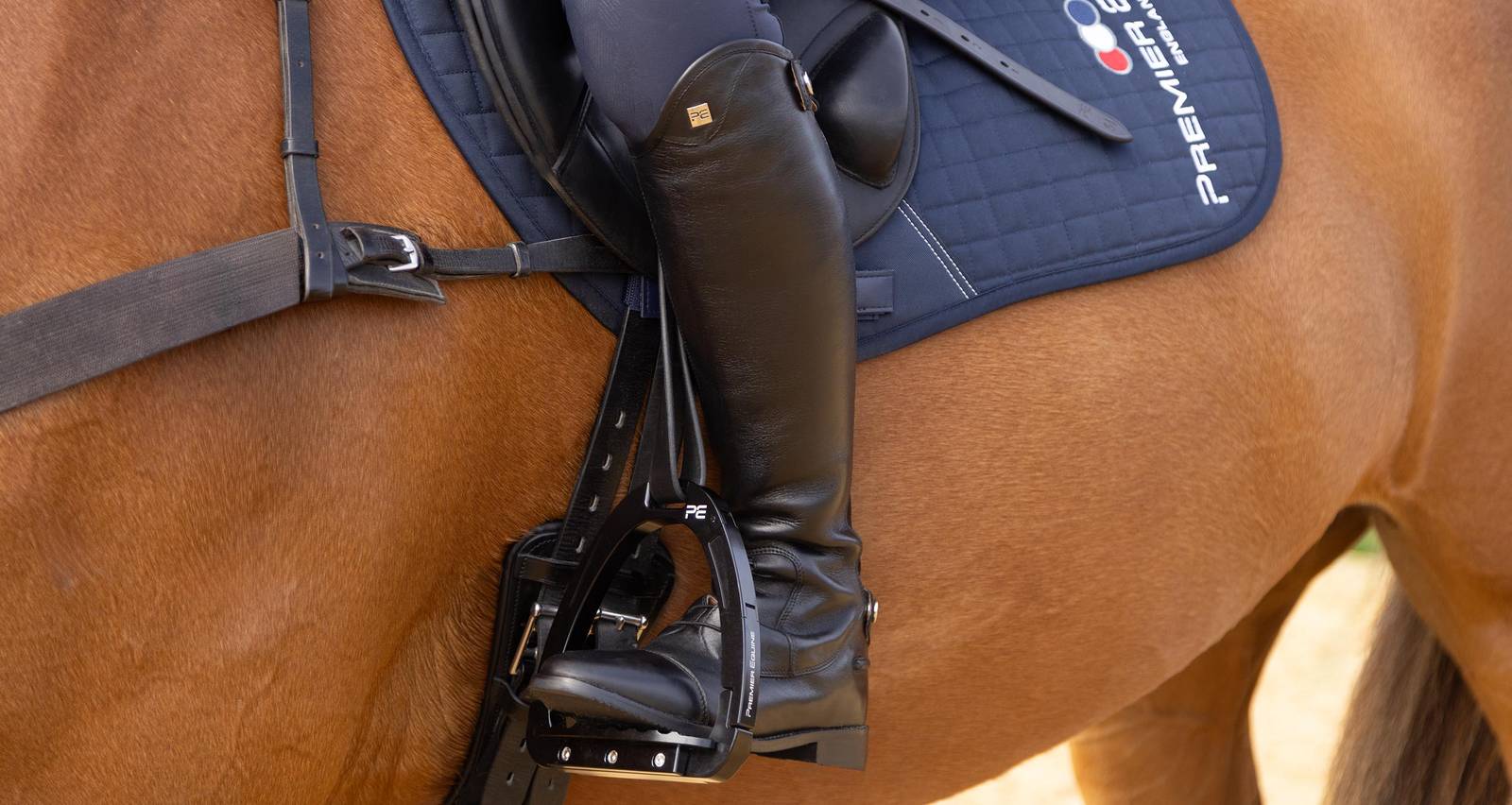
How should tall riding boots fit?
Tall riding boots should fit closely around the foot, ankle and calf without sharp pressure, numbness or restricted movement. The heel should feel stable, the shaft should not rotate and the zip should close smoothly without needing excessive force. New leather boots will feel slightly firmer and higher than they will after regular use, because the ankle begins to crease and the shaft settles as the leather moulds.
Foot: secure at the heel, with enough room for the toes to lie naturally.
Ankle: close and supported, without excessive folding or a loose pocket around the joint.
Calf: evenly fitted, with no rotation, wide gaps or concentrated pressure from the zip.
Height: high enough for a refined line, while still allowing the knee to bend as the boot settles.
Close contact starts with fit
Why the right tall boot fit matters
A long riding boot sits between the rider's leg, the saddle flap and the stirrup. When the fit is balanced, the boot follows the leg and moves with it. This reduces unwanted bulk, helps the lower leg feel stable and gives the rider a more direct feel against the horse's side.
A boot that is too loose can twist, drop excessively or create folds behind the knee and ankle. A boot that is too tight can place pressure across the calf, foot or zip. Both can become distracting during schooling, hacking or competition.
The aim is a close, composed fit that supports the rider's position without asking the leg to fight the boot.
Measure the leg you ride with
How to measure for tall riding boots
Measure in the breeches or riding tights and socks you normally wear. A thicker sock, an extra thermal layer or different breech fabric can change the calf measurement enough to affect the fit. Use a flexible tape measure and, where possible, ask someone to help so the tape stays level.
Foot size
Start with your usual shoe size. The foot should be secure without compressing the toes or allowing the heel to lift excessively.
Calf width
Measure around the widest part of each calf. Keep the tape close but do not pull it into the leg. Use the larger measurement if your calves differ.
Boot height
Measure from the floor at the back of the heel up to the crease behind the knee. Keep the leg in the position shown in the relevant product size guide.
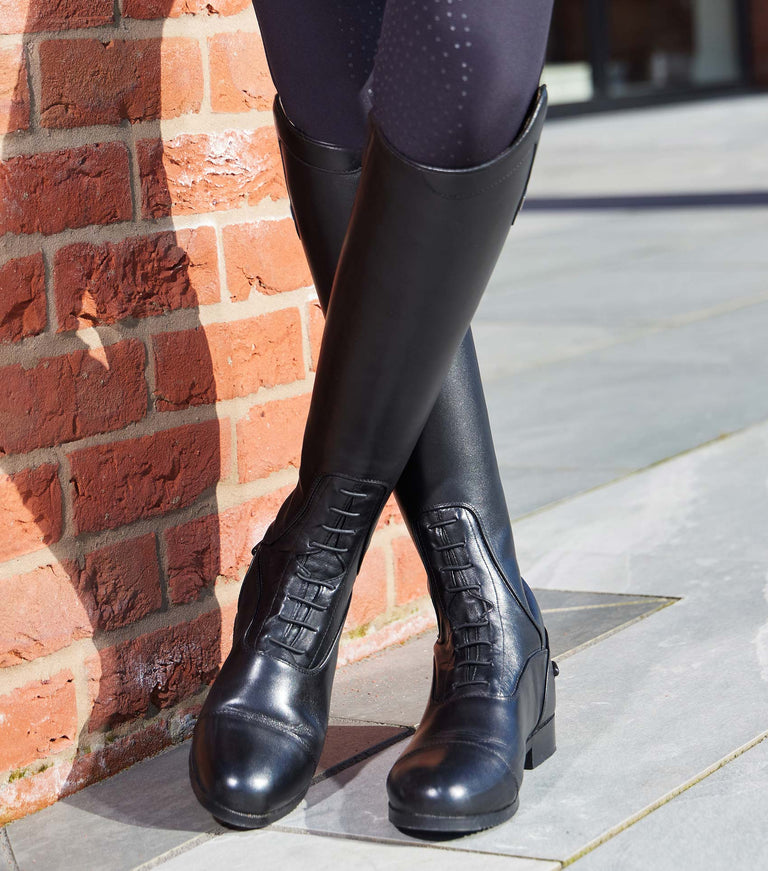
- Measure both legs. Natural differences between calves are common. Use the larger calf measurement when selecting a standard fit, keeping in mind that designs with elasticated panels can help accommodate small differences in calf size.
- Take the measurement at a normal time of day. If your legs tend to change slightly through the day, measure when you would usually ride.
- Keep foot size and leg fit separate. Do not choose a longer foot simply to gain more room around the calf. Use the available calf-width option and the product size guide.
- Check the exact model. Shaft shape, stretch panels, lacing and leather construction differ between boots, so the same measurements may feel different across styles.
- Ask before forcing the fit. If you sit between measurements or the zip will not close with steady, controlled pressure, contact the Premier Equine team before wearing the boots outside.
Read the fit from the ground up
What a correct fit should feel like in each area
A tall boot can be the correct foot size and still be wrong through the calf or height. Check every area before deciding whether the overall fit is right.
| Area | A balanced fit | Signs to reassess the size |
|---|---|---|
| Toes and forefoot | Toes lie naturally. The forefoot feels held without being compressed. | Pinching, numbness, toes pushed forward or the foot sliding from side to side. |
| Heel | The heel feels stable with only the small amount of movement expected from the boot's construction. | Repeated lifting, rubbing or the foot moving independently inside the boot. |
| Ankle | The boot follows the ankle and allows controlled flexion. A new leather boot may feel firm before a natural crease develops. | A large loose pocket, deep folds, sharp pressure or restricted ankle movement. |
| Calf | Close and even contact around the leg. The boot stays facing forward and does not rotate. | Wide gaps, twisting, bulging around the zip or pressure concentrated on one point. |
| Top line | The top sits close to the knee and creates a clean line, with enough allowance for the boot to settle. | The boot collapses heavily, sits far below the knee or causes sharp pressure when the knee bends. |
| Zip and closure | The zip follows a straight path and closes with steady pressure. Any top or bottom fastening sits flat. | The zip is forced, pulled sideways, repeatedly separates or sits over a pronounced bulge. |
The first five-minute check
What to do when you first try tall boots on
Try both boots with your normal riding layers. Zip them while standing evenly, then walk, bend the knees and take up a position similar to the one you use in the saddle. The fit should feel close, but you should still be able to move naturally.
Check alignment
The centre front of the boot should remain centred on the leg. Look for twisting, uneven height or a zip being pulled to one side.
Check the heel and ankle
Walk on a clean indoor surface. The heel should remain stable and the ankle should flex without sharp rubbing.
Check the top line
Gently bend the knee. A new boot can feel high, but the top should not create severe pressure or prevent normal movement.
Check the closure
The zip may feel close on a fitted boot, but it should close smoothly and remain straight. Avoid repeated force on the zip pull.
A high first fit can be intentional
How high should tall riding boots sit?
New long riding boots often sit close to the crease behind the knee. This creates enough height for the shaft to settle into its working position as the ankle flexes and the material moulds. The exact amount of settling depends on the leather, panel construction, stiffness and design of the individual model.
The intended riding discipline should be considered when selecting boot height. Riders in jumping disciplines typically ride with shorter stirrups and a more deeply bent knee, so there should be sufficient clearance behind the knee to allow unrestricted movement throughout the ride and over fences. A boot that is too tall may interfere with the rider's leg position or become uncomfortable as the knee flexes.
For dressage, where riders use longer stirrups and maintain a longer, more extended leg, a taller boot is generally appropriate. The straighter leg position allows the boot shaft to sit higher without restricting movement, while providing the elegant silhouette and support traditionally preferred for the discipline.
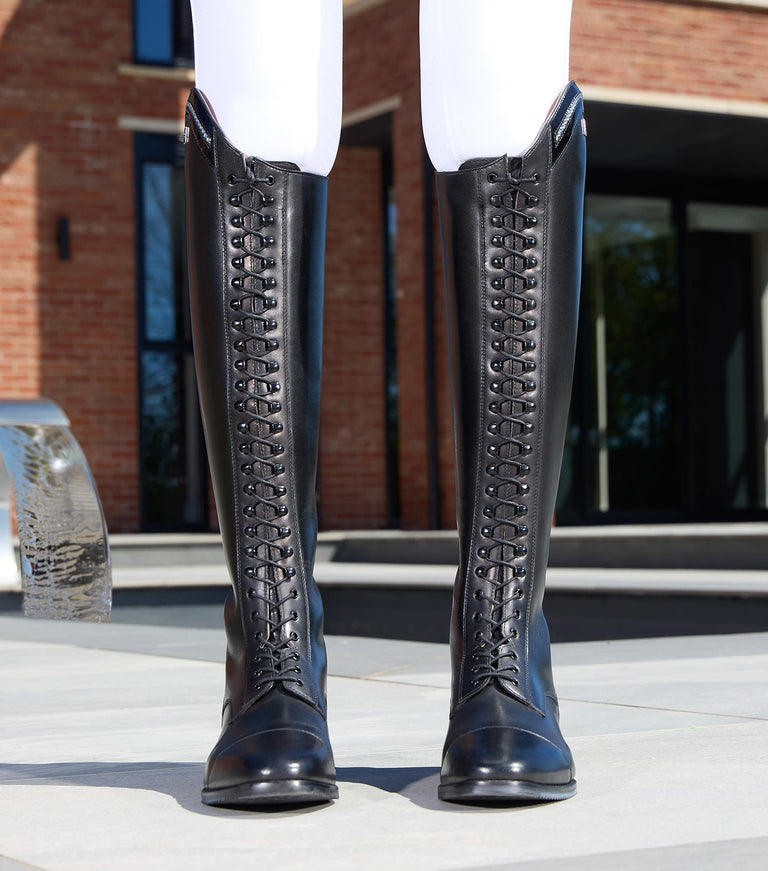
Height should be judged with calf fit
A boot can appear tall because it is the correct new height, or because the calf is too loose and the shaft is not held in position. Check whether the boot remains upright and aligned before deciding that height alone is the problem.
A fitted calf helps the shaft retain its line. Stretch panels and lacing can refine the fit, but they should support the boot's intended shape rather than compensate for a substantially incorrect size.
Let the boot learn the leg
How to break in leather tall riding boots
Break-in should be gradual. Wear new boots for short periods indoors, then increase the time as the ankle begins to flex comfortably. Your first rides should allow you to check movement, heel stability and pressure without committing to a long session.
Natural creasing around the ankle is part of a leather boot beginning to mould. Deep collapse, persistent pinching or a zip under visible strain suggest a fit issue rather than a normal break-in stage.
Begin with short periods of standing and walking on a clean indoor surface.
Use the same socks and breeches you wore when measuring and checking the fit.
Increase wear gradually, checking the ankle, heel, calf and back of the knee each time.
Allow leather to dry naturally. Avoid direct heat or soaking the boot to force it to soften.
Break-in varies by model. Some supple leathers are designed to feel comfortable from the first ride, while firmer boots take longer to develop their working crease.
Different legs need different solutions
Premier Equine tall boot designs to consider
The Premier Equine tall riding boot collection includes different approaches to shaping, adjustment and initial feel. The right model depends on your foot, calf, discipline and the type of fit you prefer.
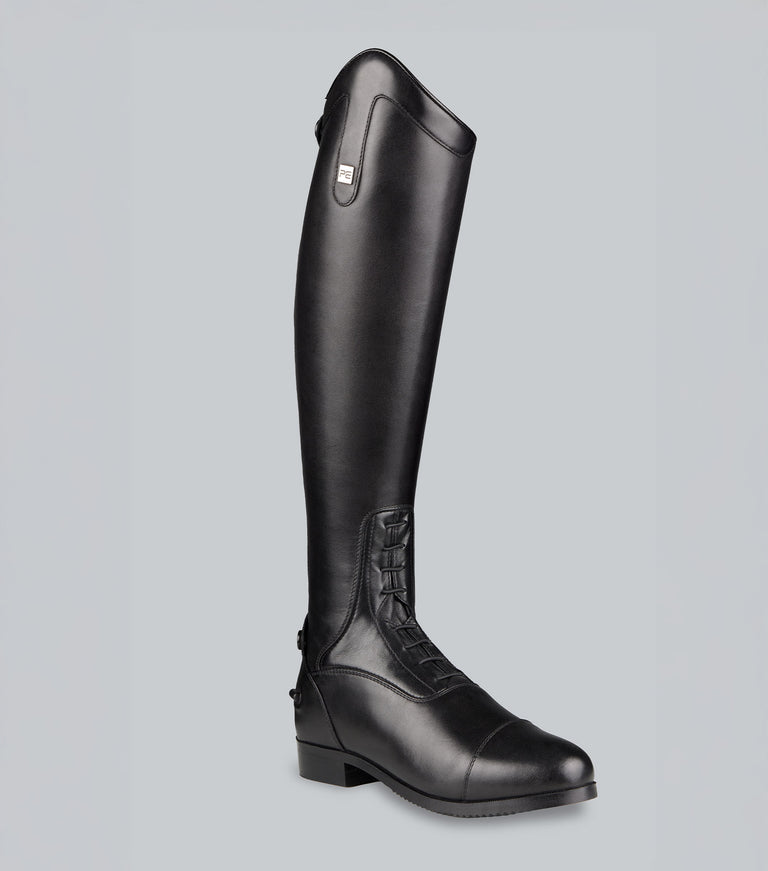
Courbette Leather Field Tall Riding Boots
Anatomically contoured panels and pre-shaped construction follow the riding position. Elasticated front laces, an inner-calf stretch section and stretch beside the outer zip help the shaft sit closely around different leg shapes.
Available in Regular and Wide calf options.
Explore the Courbette boots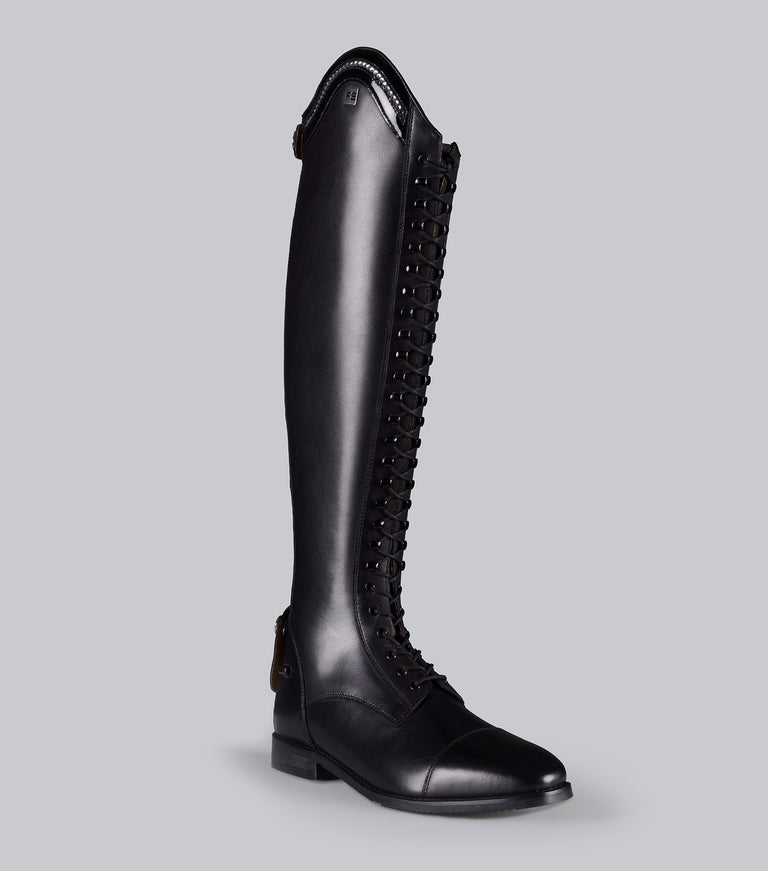
Astra Women's Leather Tall Riding Boots
A full-front lace-up system works with a rear zip and elastic panel to provide more scope for adjustment through the leg. The contoured shape and raised outer line create a composed competition profile.
Available in Regular and Wide calf options.
Explore the Astra boots
Modus Womens Leather Dress Tall Riding Boots
Premium-grade European leather and a contoured dress boot shape create a refined, close-fitting profile. A discreet elasticated panel at the rear works with the outer-calf YKK zip to support flexibility and a secure fit, while the textured inner calf helps maintain contact in the saddle.
Available in Regular and Wide calf options.
Explore the Modus bootsProtect the fit you chose
How care affects the fit and shape of tall boots
Leather, zips and shaped panels work together to hold the shape of a tall riding boot. Consistent care helps the boot flex where it should, keeps dirt away from the closure and reduces unnecessary collapse during storage.
Remove surface dirt
Use a soft brush or damp sponge, paying particular attention to the zip and the rim of the sole. Remember to condition leather boots regularly.
Allow leather to dry naturally
Keep boots away from direct heat sources, which can dry the leather too quickly and affect its feel.
Keep the closure clean
Remove dust and debris from the zip regularly so it can travel smoothly without unnecessary strain.
Support the shaft
Use boot trees and store tall boots upright in a suitable boot bag to help retain their shape between rides.
Explore Premier Equine riding boot accessories, including boot trees and tall boot storage options.
Frequently asked questions
Tall riding boot fit questions
Should tall riding boots feel tight when they are new?
They should feel close and supportive, particularly around the calf and ankle. Comfortable pressure can be expected from a fitted design. Pain, numbness, restricted circulation or a zip that must be forced indicate that the fit needs reassessing.
How much room should there be around the calf?
The calf should fit as closely as possible without feeling restrictive. This area of the boot experiences the greatest amount of wear through contact with the saddle, meaning the leather will naturally soften and may stretch slightly over time. A close initial fit helps maintain support and prevents excessive movement as the boots break in. The shaft should follow the calf evenly. Stretch panels can provide controlled allowance, but the boot should retain its intended shape.
Where should tall riding boots sit behind the knee?
A new boot normally sits close to the crease behind the knee so it can settle with use. It may touch when standing, but it should allow the knee to bend without sharp or severe pressure. Follow the height guidance for the specific model.
Do all leather tall boots drop by the same amount?
No. The amount of settling depends on the leather, shaft stiffness, ankle construction and panel design. Use the Premier Equine size guide for the exact model and do not apply another brand's drop allowance.
Should I size up in the foot to fit a wider calf?
Choose the foot size that fits your foot, then select the appropriate calf option. Increasing foot length to gain calf space can leave the heel and forefoot unstable. Several Premier Equine tall boot styles are offered in Regular and Wide calf fits.
How long does it take to break in tall riding boots?
It varies by design and leather. Firmer boots need time to develop a natural ankle crease, while supple styles may feel settled much sooner. Increase wear gradually and reassess any persistent pressure rather than assuming pain is part of the process.
Can I use heat or water to make leather boots fit faster?
Avoid direct heat or soaking the boot to force the leather to change. Allow the material to mould through normal wear and follow the care instructions provided for the product.
The final fit decision
Choose the boot that follows your leg
A tall riding boot should feel secure enough to support a quiet lower leg, shaped enough to maintain close contact and comfortable enough to let you concentrate on the ride. Measure carefully, compare the exact model and give the construction time to settle as intended.
Explore tall riding bootsSizing, construction and available calf options can vary by model. Check the individual product page and size guide before purchase. Contact Premier Equine if you need help comparing measurements.

