

Posted
Horse rug guide · Turnout rugs
Choose the fit first. Then build the protection around the horse.
A turnout rug has to sit correctly before fabric, fill or weather protection can do their job. This Premier Equine guide starts with horse shape and fit, then explains outer fabrics, rug weights, practical rugging decisions, waterproof technology and liner systems.
Quick answer
How should you choose a turnout rug?
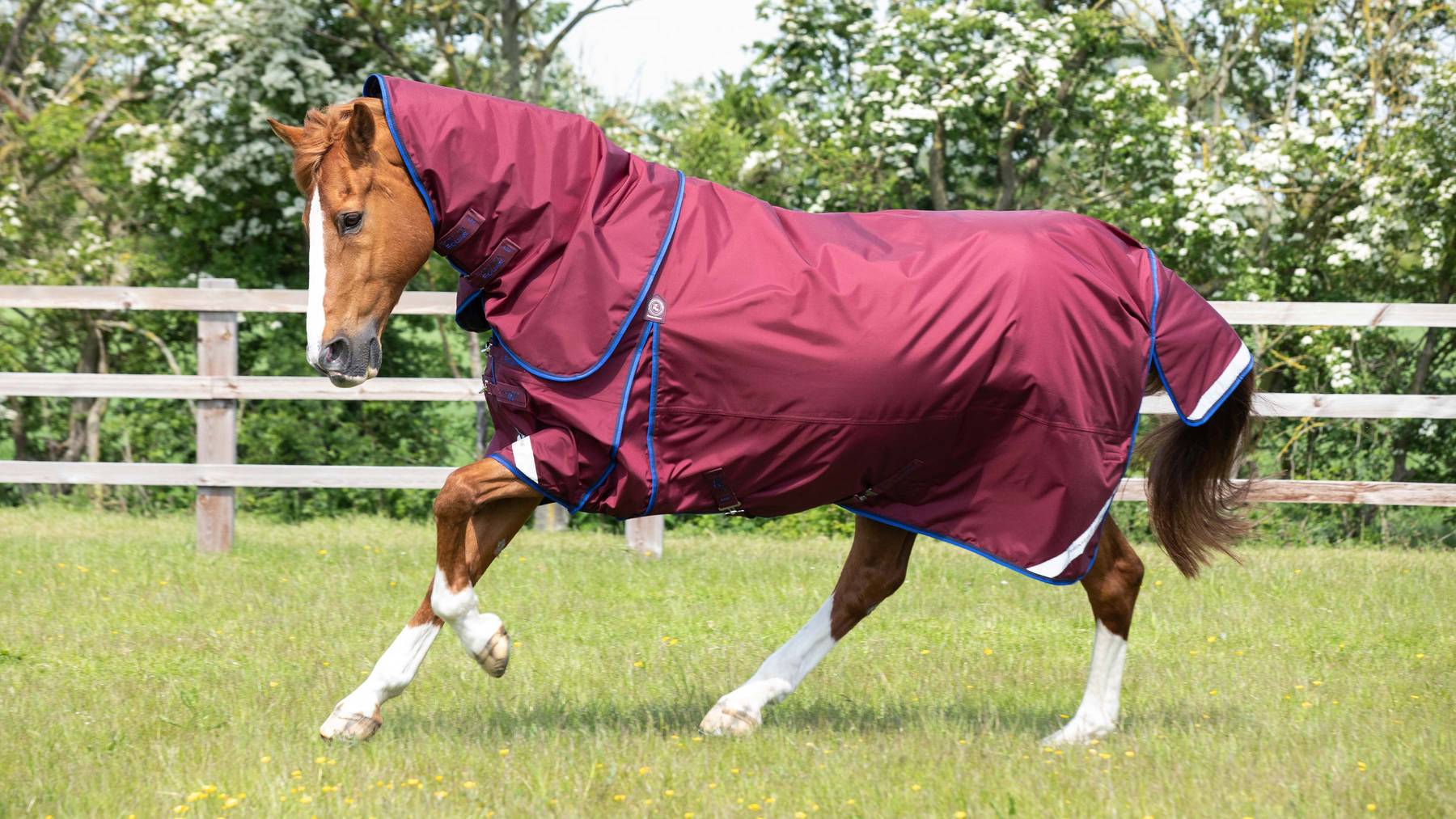
Start with fit and horse shape. Then choose the outer fabric for the turnout routine, decide how much insulation the horse actually needs, select the right neck coverage and only then refine the choice by weather, liner compatibility and individual product features.
Fit before fabric
Which Premier Equine turnout rug fit suits your horse?
Look at the horse before the rug. Shoulder width, wither shape and overall build change how a turnout rug sits and how freely it can move in the field.
Broad, powerful or very mobile?
A deeper cut with more shoulder room can help the rug move with a broader horse rather than being pulled backwards through the chest.
High or prominent?
A neckline that gives extra wither clearance can reduce concentrated pressure over a sensitive area.
Buster + Akoni
Same fit family, different outer fabric. Both use the original Buster pattern with an extra-high elasticated shoulder gusset. A useful fit for broader horses and horses needing greater shoulder freedom.
Stratus
A cleaner fit better suited to a narrower horse or one with more sloping shoulders. It does not use the extra-high Buster/Akoni shoulder profile.
Titan
A strong starting point for a regular-build horse. The mid-height shoulder gusset gives a balanced fit with controlled room through the shoulder.
Hardy / Half Neck
Designed to give additional wither clearance. Particularly useful where a high wither or pressure around the wither needs more consideration.
Important: Buster and Akoni share the same fit concept. The key difference is the outer fabric and the role each range is designed to perform. Always measure first and check the individual product size guide before changing size.
Outer fabric
Which turnout rug fabric should you choose?
Denier describes the yarn weight used in the outer fabric. It helps compare how substantial the outer is, but the material itself matters too. Polyester and ballistic nylon behave differently in the field, particularly when abrasion, tearing, surface water and drying time are considered.
Lightweight with ripstop-style support
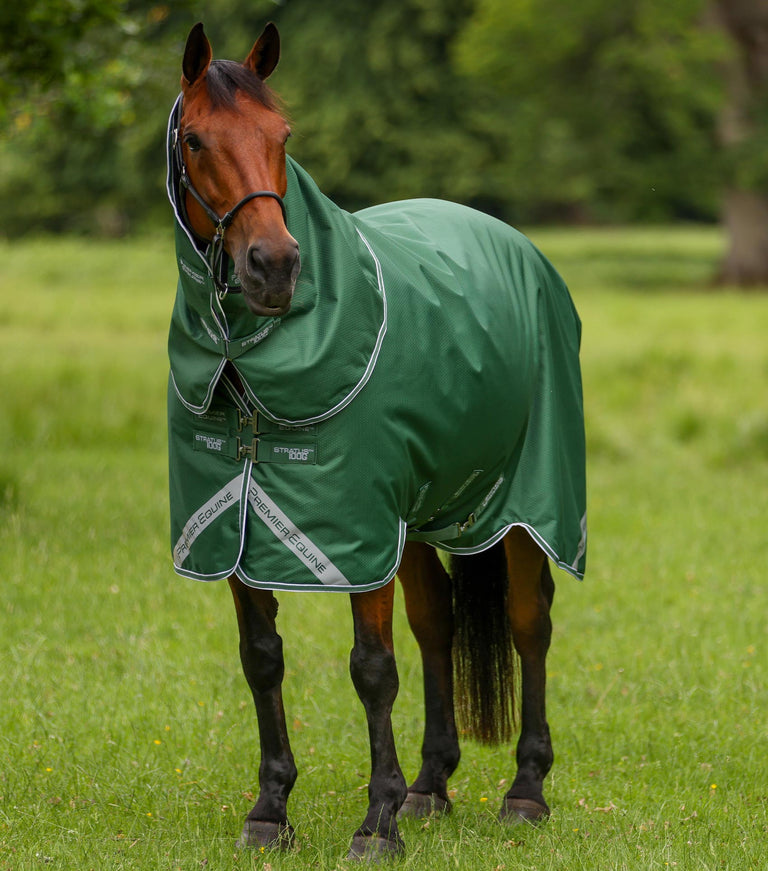
Used across current Stratus and Akoni designs. The diamond triple-weave construction helps limit the spread of a tear while keeping the outer light and flexible.
Higher abrasion resistance with quicker drying
Strong polyester construction with good abrasion resistance. Polyester generally holds less surface water than nylon, so it can feel lighter when wet and dry more quickly.
Strong everyday durability
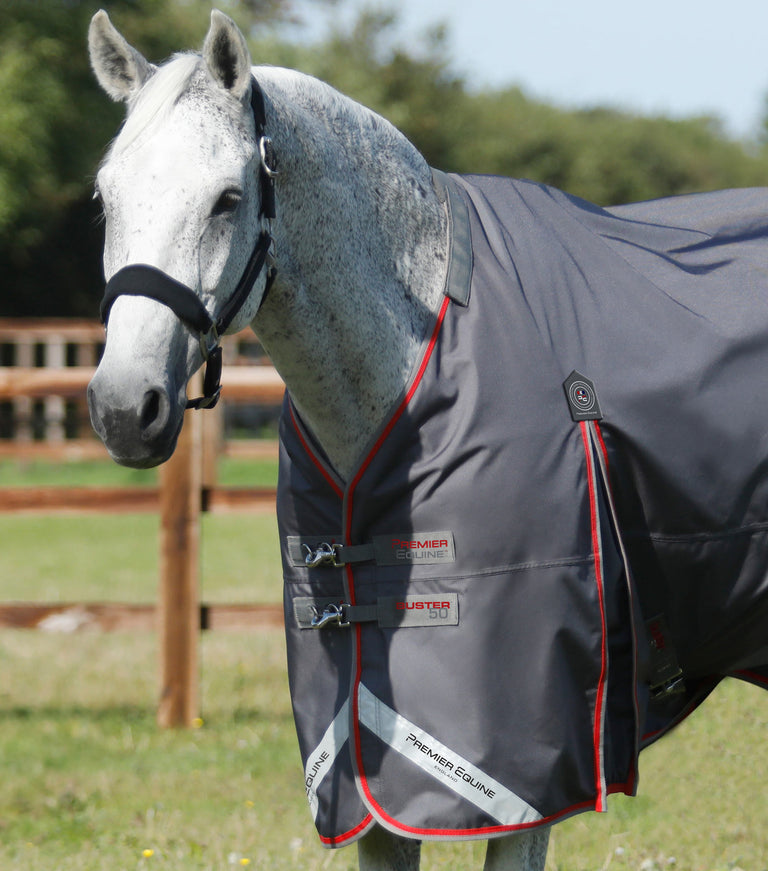
A lighter-weight ballistic nylon with excellent tear, puncture and abrasion resistance. Buster combines this outer with the original Buster fit and extra-high shoulder gusset.
The toughest current PE outer direction
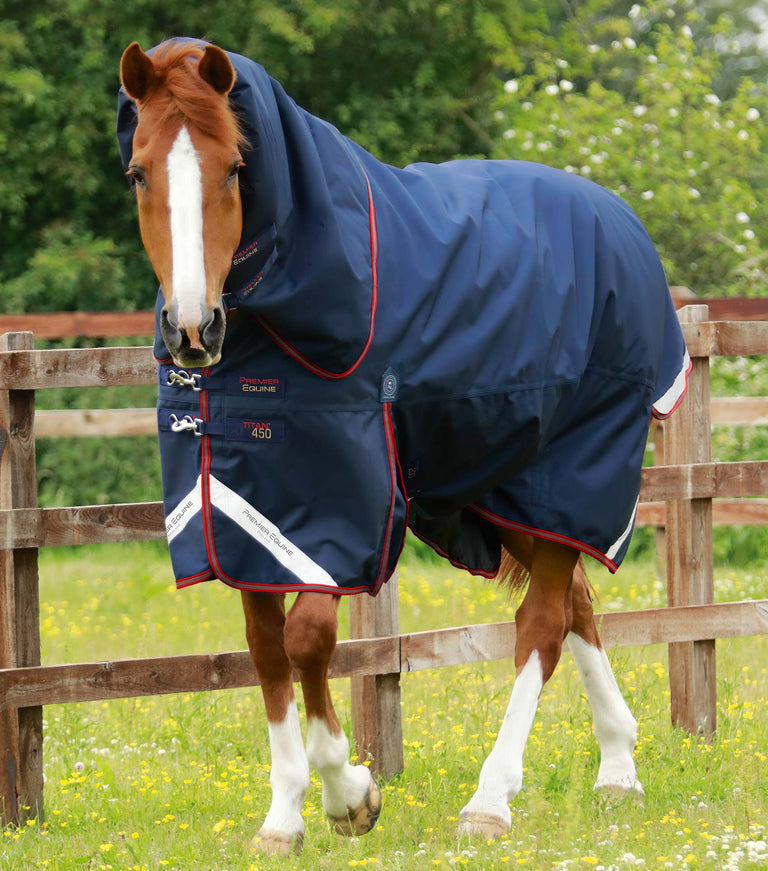
Heavier and more substantial ballistic nylon with superior resistance to tearing, puncture and abrasion. Designed for demanding turnout and horses that are especially hard on rugs.
Fill and insulation
How much fill does your horse actually need?
Choose fill after fit and outer fabric. The gram figure describes insulating fill, not the weather the rug is automatically “for”. The horse still makes the decision.
Waterproof protection without added insulation.
A small step above a rain sheet for cooler or changeable conditions.
Light warmth when 0g is not quite enough.
A clearer increase in insulation for colder turnout.
Substantial insulation for horses and conditions that genuinely justify it.
Practical starting point
A turnout rugging guide for clipped and unclipped horses.
This chart is a starting point, not a rigid rule. Use the temperature band to orient yourself, then adjust for rain, wind, body condition, forage, shelter, activity and the individual horse.
| Temperature | Turned out · unclipped | Turned out · clipped | What changes the decision? |
|---|---|---|---|
| 10 to 15°C | Nothing or 0gOften no rug in dry conditions. Use waterproof protection if the horse needs help staying dry. | 0g or lightweightStart with rain protection and add only the warmth the horse actually needs. | Persistent rain, wind exposure and poor shelter can move the decision upwards. |
| 5 to 10°C | Nothing or lightweight0g to low fill can be useful in wet, exposed conditions. | LightweightOften 50g to 100g as a starting point, with neck coverage where useful. | Clip type, body condition and how active the horse is in the field. |
| 0 to 4°C | Lightweight or medium-weightChoose around exposure and the horse’s natural coat. | Medium-weightOften around 150g to 250g, with neck coverage if needed. | Wet cold usually feels very different from dry cold. Check beneath the rug. |
| -10 to 0°C | Medium-weight, possibly with neckIncrease only where the horse needs it. | Medium to heavyweightMore insulation and neck coverage may be appropriate for fully clipped horses. | Shelter, forage, age and whether the horse is maintaining condition. |
| Below -10°C | Heavyweight where requiredStill assess the individual horse rather than rugging by temperature alone. | Heavyweight + adaptable layeringA liner-compatible system can help manage severe or changing conditions. | Severe weather requires more frequent checks and closer attention to condition and comfort. |
Nothing or 0g. Use waterproof protection if the horse needs help staying dry.
0g or lightweight. Add only the warmth the horse actually needs.
Persistent rain, wind and poor shelter.
Nothing or lightweight. 0g to low fill can be useful if wet or exposed.
Lightweight. Often 50g to 100g, with neck coverage where useful.
Clip type, body condition and field activity.
Lightweight or medium-weight depending on exposure and coat.
Medium-weight, often 150g to 250g, with neck coverage if needed.
Wet cold, wind, shelter and regular checks beneath the rug.
Medium-weight, possibly with neck. Increase only where needed.
Medium to heavyweight. More insulation may suit a fully clipped horse.
Shelter, forage, age and condition.
Heavyweight where genuinely required.
Heavyweight with adaptable layering may be useful in severe conditions.
More frequent checks, condition, forage and shelter.
From problem to purchase
Which Premier Equine turnout rug range is right for your horse?
Use fit first, then fabric and fill. These examples show how the current Premier Equine turnout ranges solve different real-world needs.
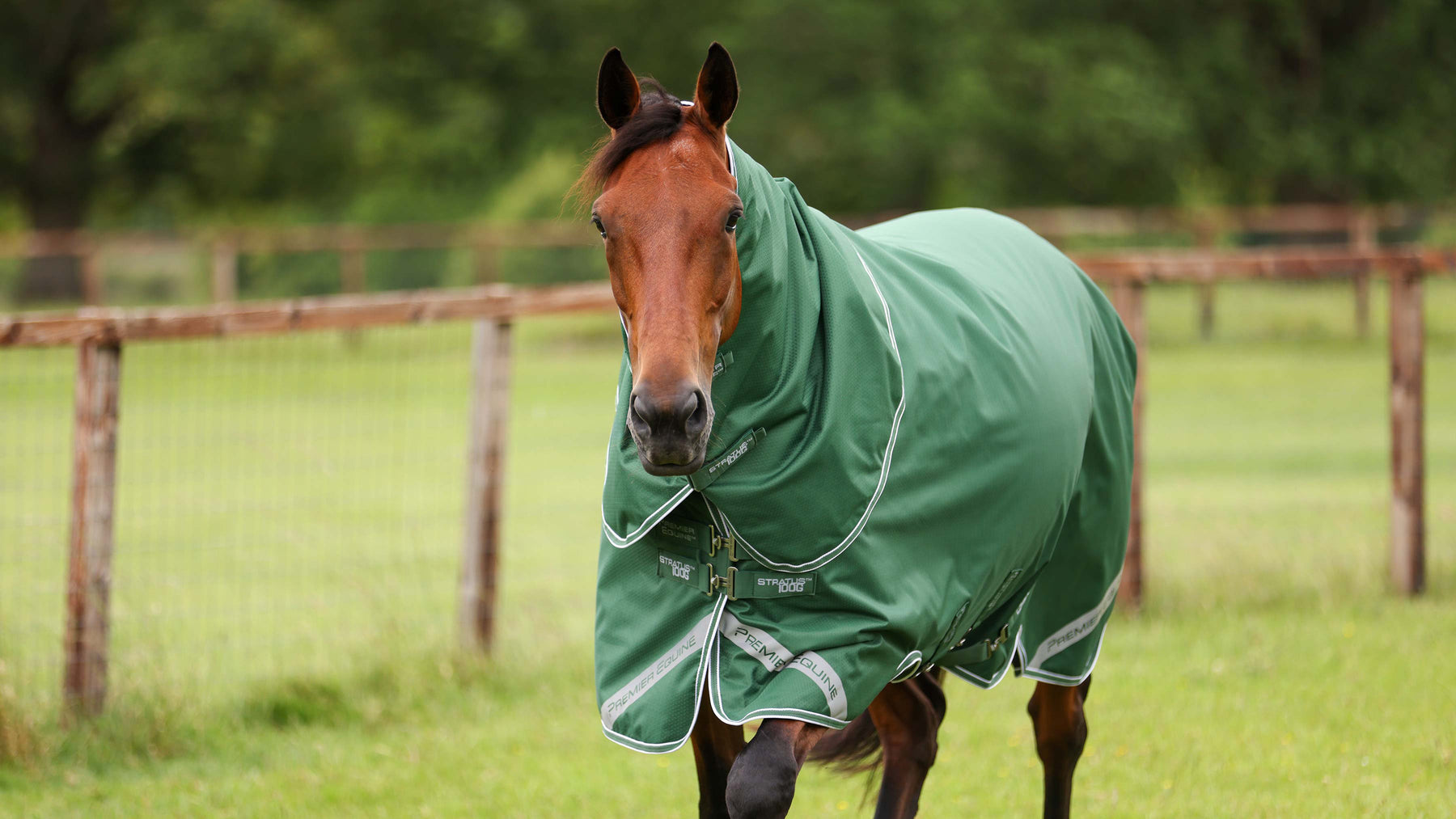
Stratus
A lighter 600D option with a cleaner fit that can suit narrower horses and more sloping shoulders. Current Stratus designs also use a waterproof and breathable membrane with a Teflon-coated finish.
Explore Stratus 100g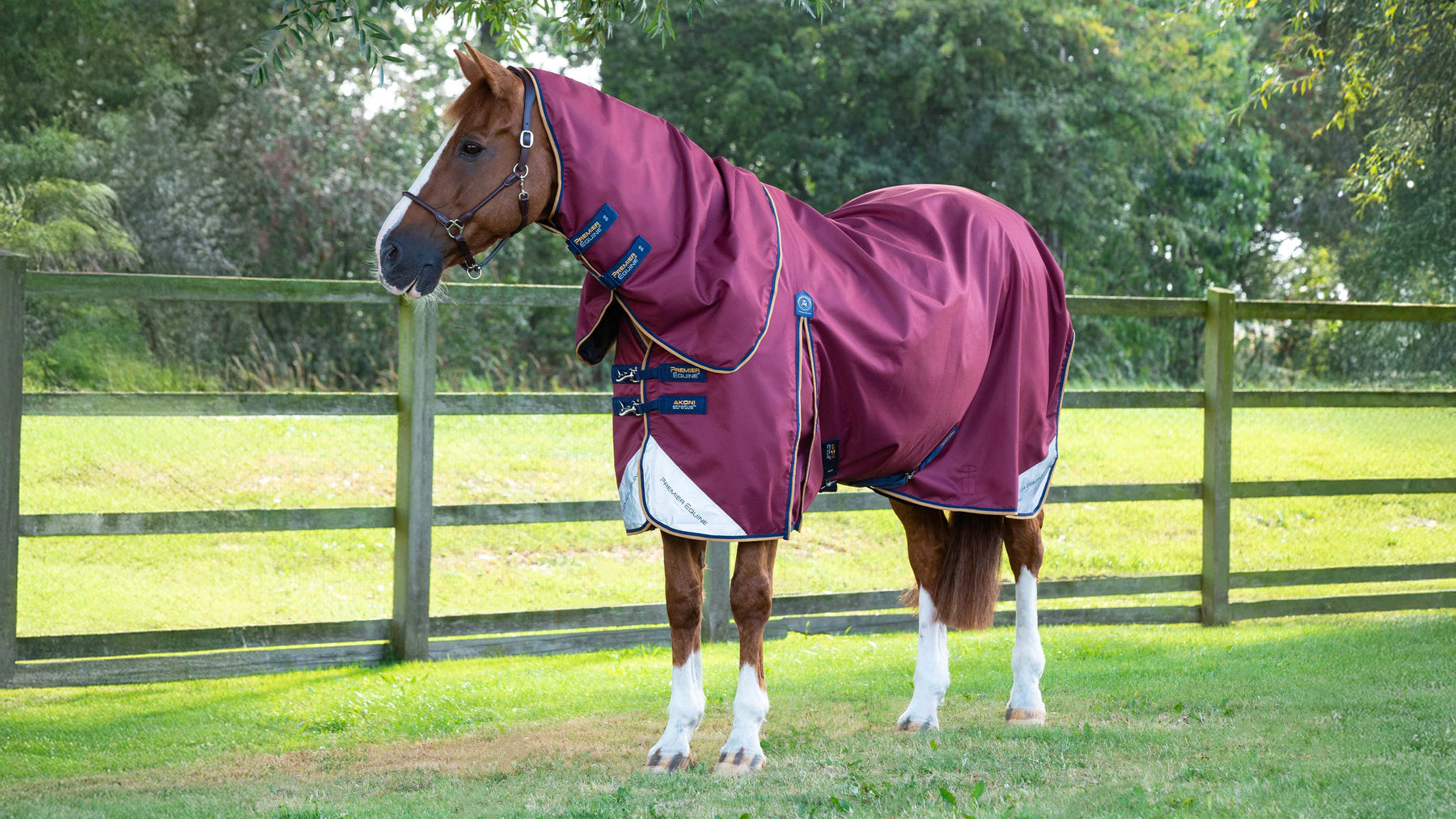
Akoni
Uses the same original Buster fit concept and extra-high shoulder gusset, but with a lighter 600D Diamond Triple Weave polyester outer. A useful choice when you want the Buster shape with a lighter-feeling fabric.
Explore Akoni 0g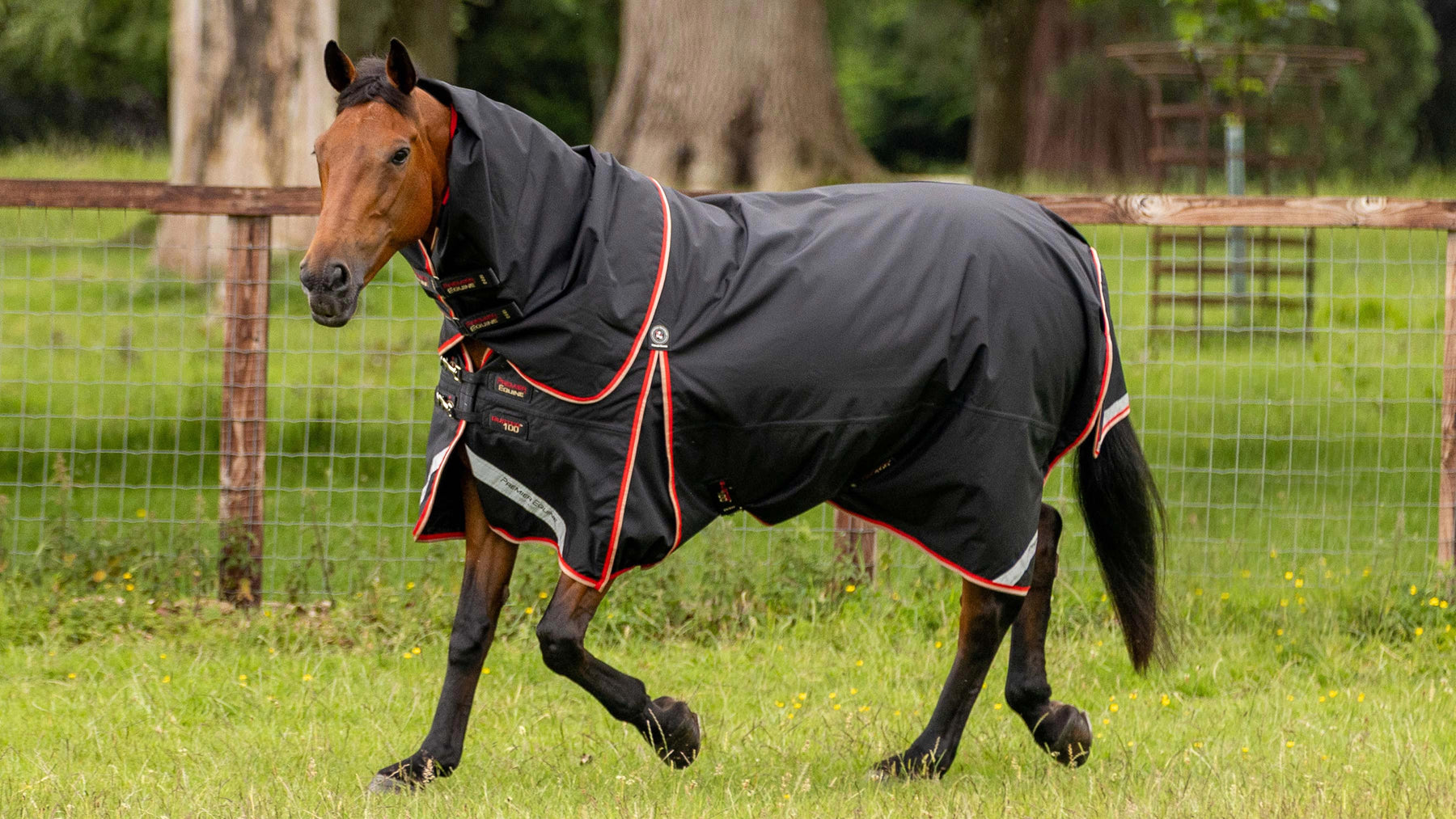
Buster
The original Buster fit with an extra-high shoulder gusset and a stronger 840D ballistic nylon outer. A strong everyday choice for broader, active horses or tougher turnout.
Explore Buster 50g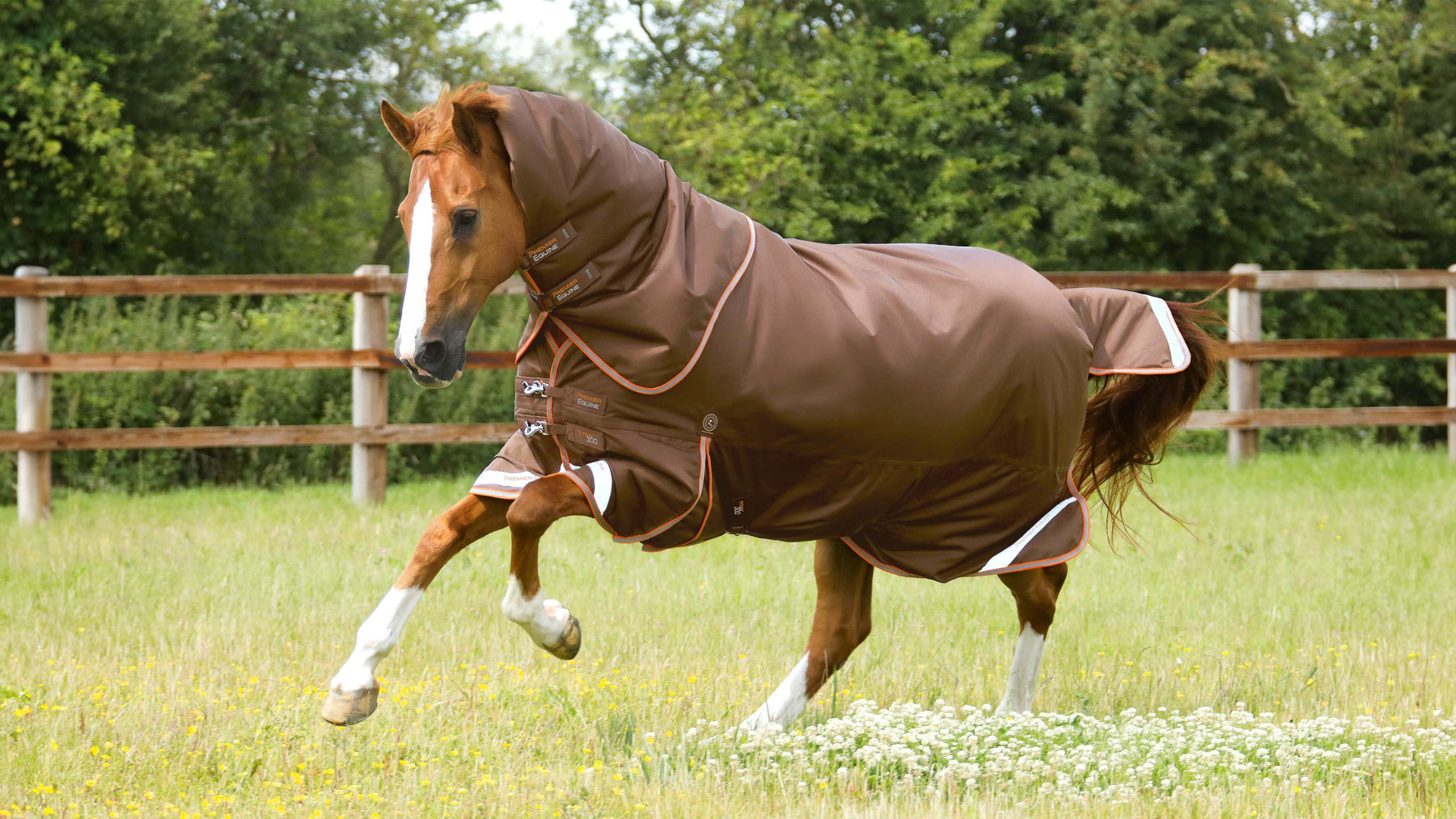
Titan
A mid-height shoulder gusset for a regular-build horse, paired with the highest-denier ballistic nylon direction in the current turnout range. Choose Titan when hard-wearing protection is the priority.
Explore Titan 450gTechnical detail
How does a Premier Equine waterproof turnout rug work?
Waterproof performance is a system, not a single coating. The exact construction varies by range, but the principle is the same: manage surface water, stop rain passing through the rug and allow moisture generated by the horse to move away.
Waterproofing, layer by layer
Teflon-coated finish
Used on current PE turnout designs such as Buster, Titan and Stratus to improve stain resistance and help reduce moisture penetration into the outer fibres.
Waterproof + breathable membrane
Sits beneath the outer fabric. Microscopic pores are designed to repel larger water droplets while allowing airflow through the rug.
Hydrophilic membrane on Buster + Titan
A second membrane deeper in the construction helps draw and disperse moisture from the horse’s coat. This supports a drier microclimate beneath the rug.
Breathable lining
Antibacterial, anti-static or shine-enhancing linings are used depending on the range to support coat comfort and moisture management.
The outer fibres can absorb surface water once the finish begins to wet out. That does not automatically mean the waterproof membrane underneath has failed.
If water is reaching the lining or the horse beneath, inspect the fabric, seams and membrane for damage. Reproofing can refresh surface repellency, but it does not replace an intact waterproof membrane.
Adaptable insulation
When does a liner system make more sense?
A liner-compatible turnout gives you another way to adjust insulation without changing the complete outer rug. This can be useful when conditions shift through the week or when daytime and night-time temperatures differ.
Choose the outer
Start with the turnout fit and fabric that suit the horse and field routine.
Check compatibility
Confirm that the individual turnout rug includes PE liner attachments before buying.
Add insulation when needed
Use compatible liners to increase warmth without replacing the complete turnout outer.
Recheck the horse
Layering increases insulation. Check beneath the rug and remove layers when the horse no longer needs them.
Compatibility matters: not every PE turnout takes a liner. Hardy rugs, for example, do not include liner attachments because of the extended half-neck construction.
Build a more adaptable rugging system with compatible Premier Equine liners.
Explore horse rug linersFrequently asked questions
Turnout rug questions, answered clearly.
Can I use a reproofing product on a Premier Equine turnout rug?
Can I attach a neck cover to an Original turnout rug?
My rug feels wet and heavy on the outside. Is it still waterproof?
Are Buster and Akoni turnout rugs the same fit?
Do Premier Equine turnout rugs come up big?
Which Premier Equine turnout rug range is the most durable?
How should I wash a Premier Equine turnout rug?
How should I store a turnout rug?
The final rug decision
Fit the horse. Match the field. Then choose the protection.
A good turnout rug decision becomes much simpler when you use the right order. Start with the horse’s build and fit. Choose the outer fabric for the turnout routine. Add the level of insulation the horse genuinely needs. Then refine the choice with neck coverage, waterproof technology and liner compatibility.
Always check the individual product page for the latest sizing, specification, materials, care guidance, liner compatibility and availability. Where health, body condition or temperature regulation is a concern, seek appropriate veterinary advice.

