

Posted
Premier Equine Journal / Living-out turnout guide
Best Turnout Rugs for Horses Living Out: What Actually Matters?
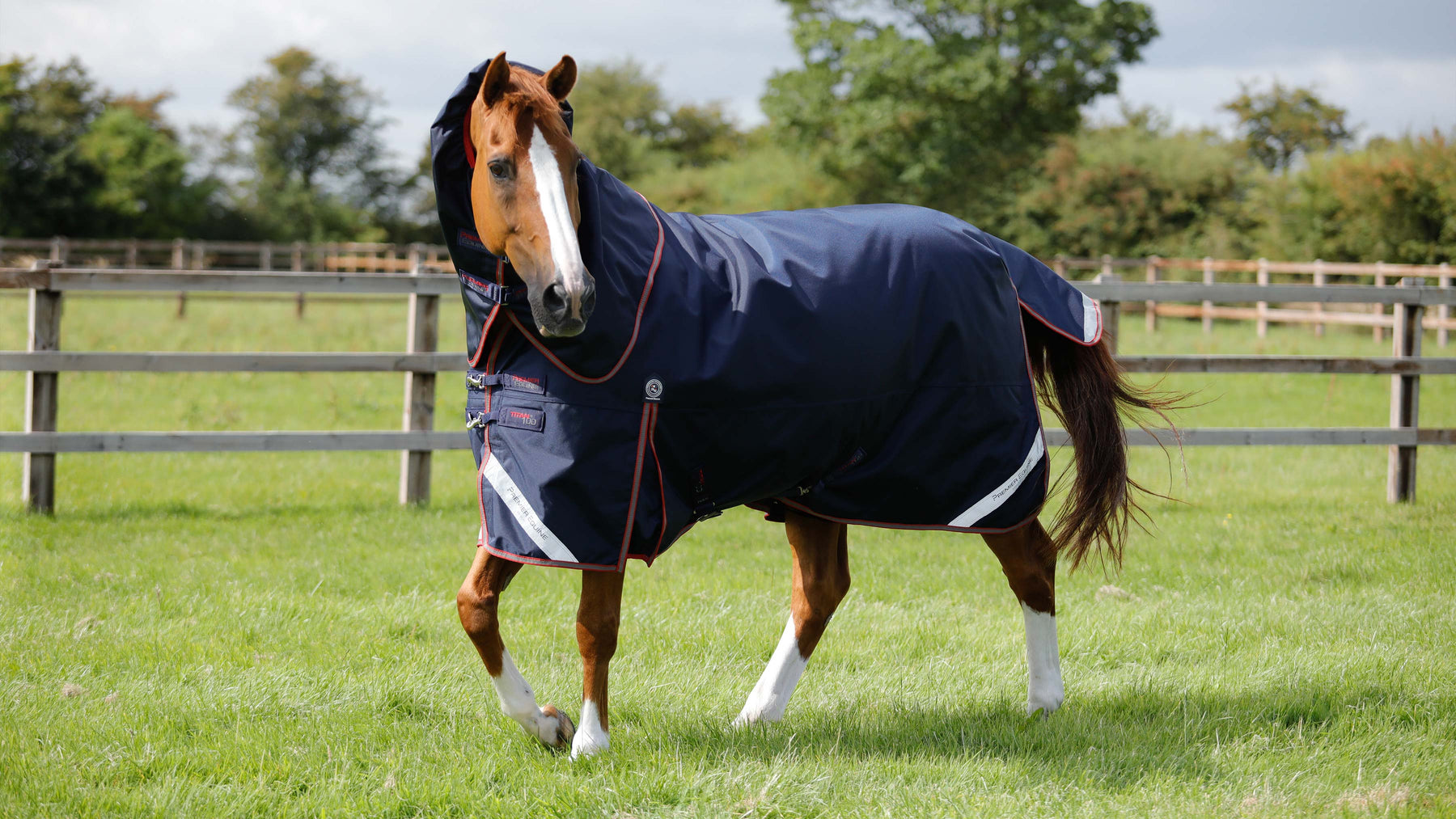
A horse living out can spend 12, 18 or 24 hours asking the same turnout rug to cope with rain, wind, grazing, rolling, mud, fencing and other horses. The right rug is chosen around that reality, not simply by buying the heaviest or highest-denier option.
Quick answer
What is the best turnout rug for a horse living out?
The best turnout rug for a horse living out is one that fits correctly and gives that individual horse the right balance of waterproofing, breathability, outer-fabric durability, insulation and coverage.
A quiet horse in sheltered turnout can need something very different from a clipped competition horse on exposed ground, or a warm horse that regularly damages rugs in group turnout.
A higher denier does not automatically mean better waterproofing. More fill does not automatically mean better protection. Start with the horse and its environment, then choose the specification.
Key takeaways
Five things to understand before you choose.
The Premier Equine Living-Out Test
Assess four things before looking at denier or fill.
“Living out” tells you how long the horse is outside. It does not tell you what the rug has to withstand. A more useful decision starts by separating the demands into four areas.
How exposed is the field?
Look at shelter, prevailing wind, drainage and how frequently the horse experiences prolonged or driving rain. Two horses living outside for the same number of hours can experience very different weather exposure.
What happens to the rug beyond the weather?
Consider group turnout, play, rubbing, fencing, trees and whether the horse has a history of damaging rugs. This is the part of the decision where outer-fabric durability becomes especially important.
What does the individual horse need?
Clipping, breed, age, body condition, natural coat, shoulder width, wither shape and whether the horse naturally runs warm or cold all influence the right turnout system.
How will conditions be managed?
Think about how often the horse is checked, whether rugs are changed through the day, how quickly temperatures move and whether a liner-compatible system would make seasonal changes easier to manage.
Long wear periods
What actually changes when a horse lives out?
Primarily, time and exposure.
A horse turned out for a few hours may experience limited rain and relatively little physical wear. A horse spending most or all of its time outside may wear the same rug while grazing for hours, walking between forage and water, rolling, lying down and interacting with other horses.
It may also experience several changes in temperature, wind and rainfall before the rug is removed.
That gives small problems with fit, moisture management, damage or insulation more time to become significant. For prolonged turnout, the rug should be considered as a complete system:
Weather protection
Waterproofing and breathability need to work together.
For a horse living out, a published waterproof rating gives you a useful technical benchmark because exposure can last for hours rather than minutes.
Every Premier Equine turnout fabric is specified to a minimum 10,000mm hydrostatic-head waterproof rating and 10,000 g/m²/24hr breathability. The standard applies across the turnout collection, so moving between Stratus, Buster and Titan is mainly a decision about fit, outer-fabric durability, fill, neck style and construction rather than paying more simply to unlock a higher core weatherproofing benchmark.
Waterproofing helps resist rain from outside. Breathability helps moisture vapour generated by the horse move outward.
Outer-fabric durability
Does a horse living out need a higher-denier rug?
Sometimes. The better question is how much physical punishment the horse is likely to give the rug.
Denier describes the outer fabric construction and is mainly useful when considering strength, abrasion resistance and durability. Waterproofness is measured separately.
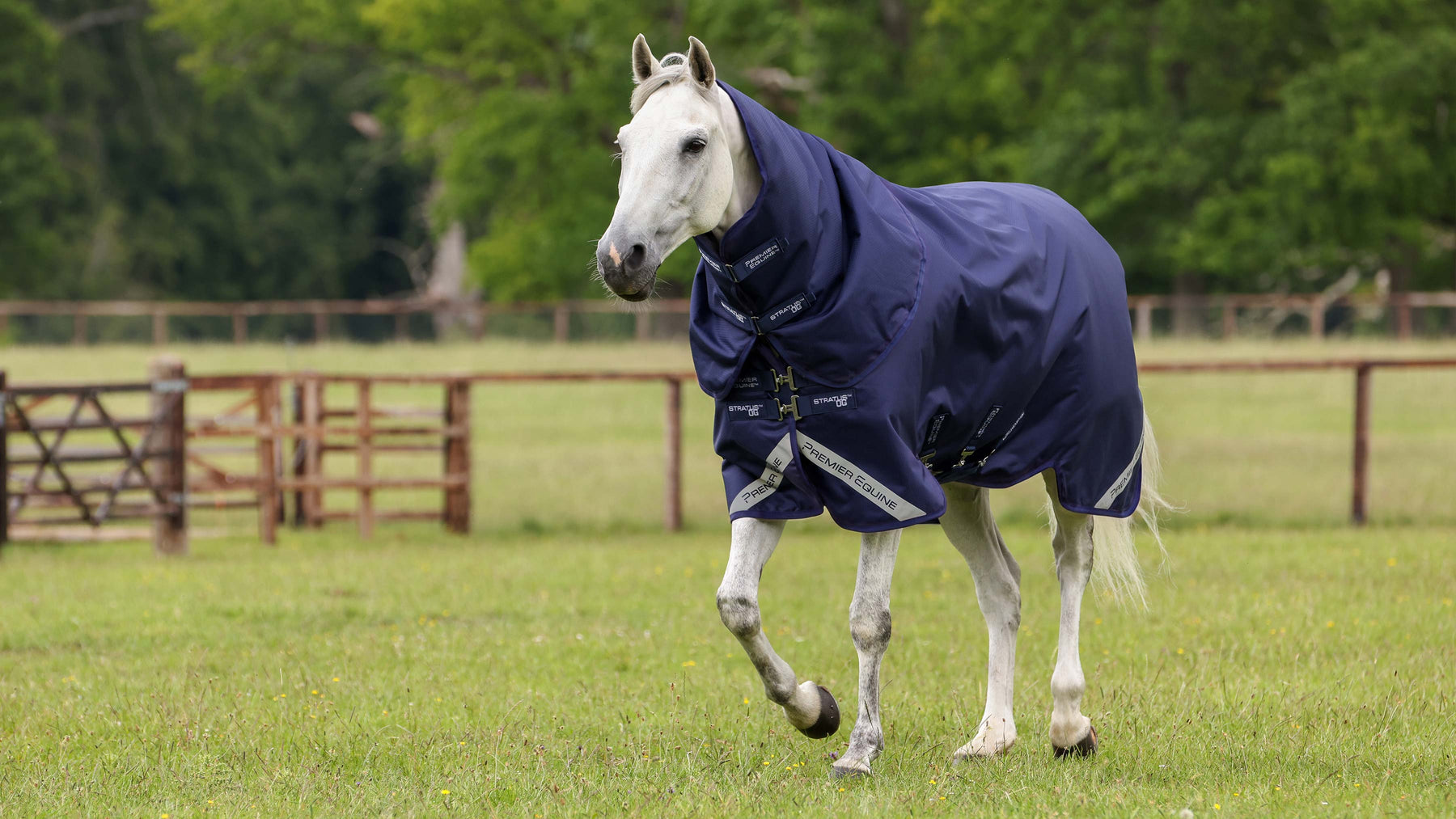
Stratus uses a 600D Diamond Triple Weave polyester outer. It is a useful direction where a lighter outer is appropriate and maximum tear resistance is not the main requirement.
600D Diamond Triple Weave polyester
A 600D polyester outer can be appropriate for quieter horses and less physically demanding turnout. Current Stratus designs combine the lighter outer with Premier Equine's core weatherproofing standard.
840D ballistic nylon
Buster moves into 840D ballistic nylon. This is a stronger everyday direction for active horses, broader horses using the original Buster fit, regular group turnout and environments where greater resistance to tearing, puncture and abrasion matters.
1680D ballistic nylon
Titan uses a 1680D ballistic nylon outer. It is the most hard-wearing outer-fabric direction in the current Premier Equine turnout collection and becomes relevant when the horse or environment genuinely places high physical demands on the rug.
Insulation
Does living out mean your horse needs more fill?
No. Fill provides insulation. It does not determine waterproofing or outer-fabric durability.
Consider whether the horse is clipped, its age, breed and type, body condition, natural coat, forage availability, activity, field shelter, wind and rain, as well as the actual temperature.
An unclipped native maintaining condition well with good shelter can have very different needs from a fully clipped competition horse on exposed ground, even when both live out for the same number of hours.
Check beneath the rug regularly around the chest and shoulder. The horse should feel comfortably warm rather than hot, clammy or cold.
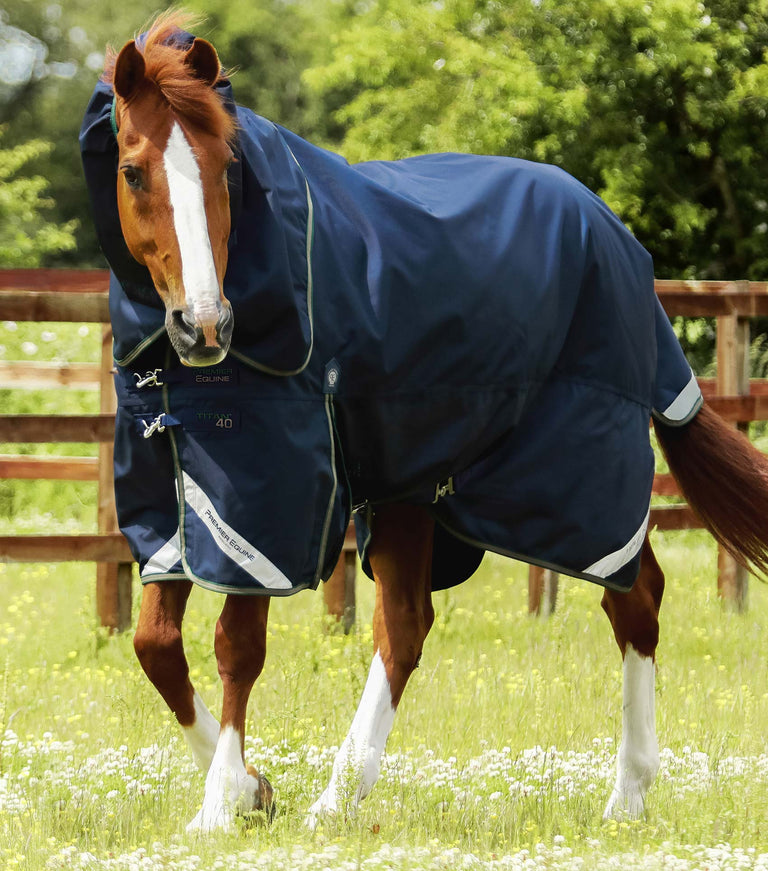
Titan 40g pairs a 1680D ballistic nylon outer with lightweight 40g insulation. It separates the need for a tougher outer from the need for more warmth.
Fit and movement
Fit becomes more important the longer the rug is worn.
A turnout rug is working on a moving horse. The horse grazes with its head lowered, walks, turns, rolls, lies down and gets back up. A rug worn for long periods has to remain secure through all of this without creating unnecessary pressure or restricting natural movement.
- Shoulders: check there is suitable freedom as the horse walks and grazes.
- Withers: look for unwanted pressure, pulling or rubbing.
- Chest: the front should fasten securely without excessive movement or restriction.
- Length: the rug should provide suitable coverage without interfering with movement.
- Neck: if using a neck cover, assess the whole system with the horse's head lowered as well as raised.

Buster Hardy 0g Half Neck
840D ballistic nylon · 0g · forward-cut half neck
The Buster Hardy is shaped with a forward-cut half neck, wither pressure relief and a seamless area over the wither. It is a useful example where neckline shape and wither comfort are a specific part of the buying decision.
Explore Buster Hardy 0g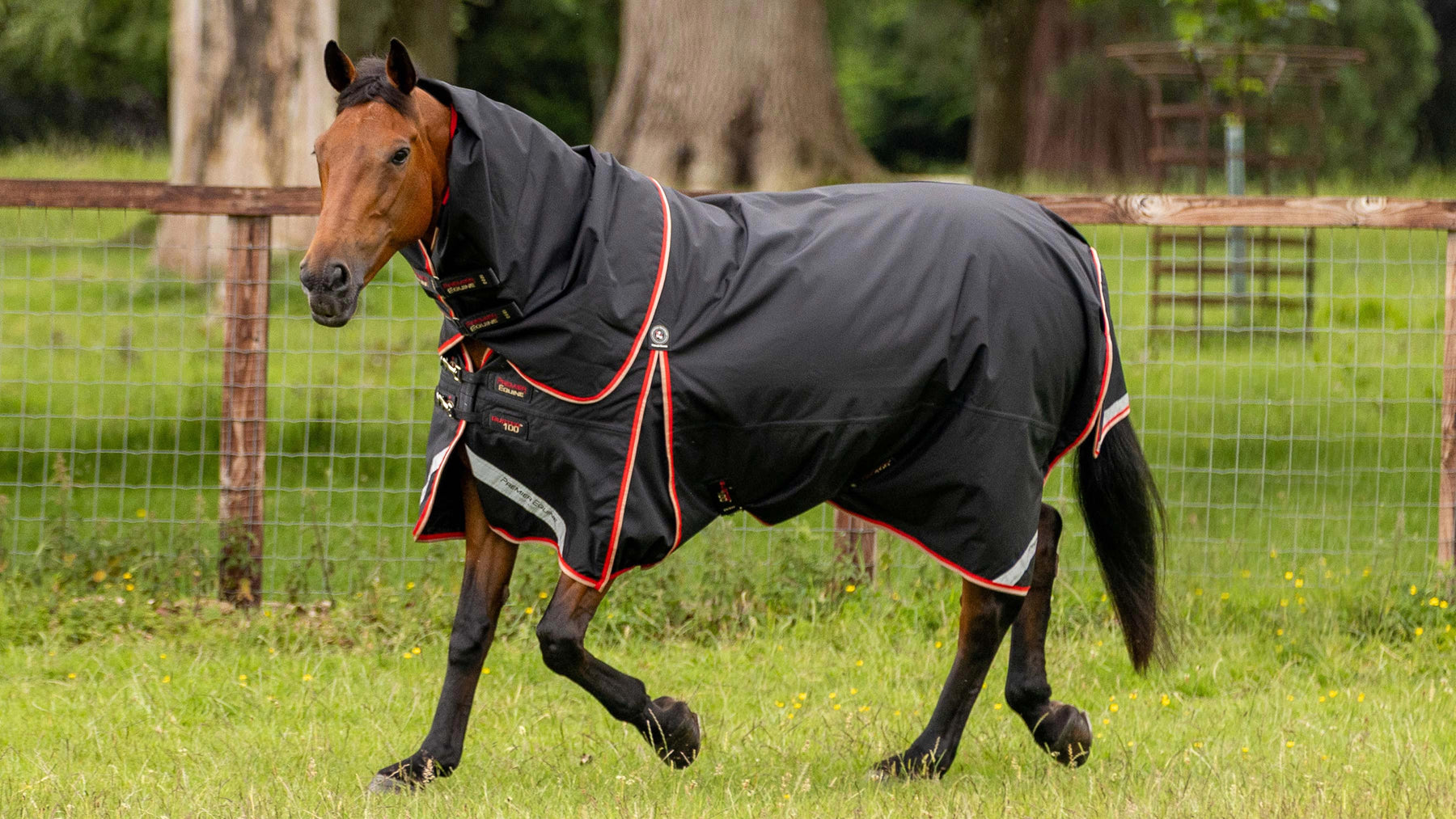
The original Buster fit
Extra-high elasticated shoulder gusset · deep-cut construction
Current Buster designs use the original Buster pattern with an extra-high elasticated shoulder gusset. This is particularly relevant when a broader or mobile horse needs more room through the shoulder.
Compare turnout rug fitsFor a wider explanation of horse shape, fit, fabric and fill, read How to Choose the Right Turnout Rug for Your Horse.
Product match
Match the Premier Equine turnout to the problem you are solving.
The most useful comparison is not “which range is best?” It is “which construction solves the needs of this horse in this field?”
| Real need | Premier Equine example | Key specification | Why it is relevant |
|---|---|---|---|
| Weather protection without fill | Stratus 600D Series 0g | 600D polyester · 0g · detachable neck · liner attachments | A lighter outer and no fill where maximum tear resistance or extra insulation is not required. |
| Stronger everyday outer with no fill | Buster Zero | 840D ballistic nylon · 0g · extra-high shoulder gusset · liner compatible | Separates weather protection and stronger everyday durability from insulation. |
| Clipped horse needing medium insulation | Buster 200g Snug-Fit | 840D ballistic nylon · 200g · Snug-Fit neck · liner compatible | Combines greater outer durability, insulation, neck coverage and Buster shoulder freedom. |
| Maximum durability without heavy insulation | Titan 40g Snug-Fit | 1680D ballistic nylon · 40g · dual-membrane system | Shows clearly that a tougher outer does not require a heavyweight fill. |
| Changing weather through the season | Titan Trio Complete | 1680D outer · 100g base · 100g, 200g and 350g liners · two neck covers | A modular system where insulation needs to change without replacing the whole turnout platform. |
| Wither pressure is a key fit concern | Buster Hardy 0g Half Neck | 840D ballistic nylon · 0g · forward-cut half neck | Provides a specific fit option designed around wither clearance and neckline protection. |

Buster 200g Snug-Fit
840D ballistic nylon · 200g fill · extra-high shoulder gusset
A practical example for a clipped horse where the decision includes stronger everyday durability, medium insulation, neck coverage and additional room through the shoulder.
Explore Buster 200g
Titan Trio Complete
1680D ballistic nylon · 100g base · three liners · two neck covers
One turnout platform with multiple insulation options. It is especially relevant where temperatures move frequently and the management priority is adaptability across the season.
Explore Titan TrioAlways check the individual product page for the latest sizing, specification, materials, care guidance, liner compatibility and availability.
Four horses, four decisions
Why “living out” does not point to one universal rug.
Unclipped native
Sheltered field
Quiet turnout with a natural winter coat
What matters: correct fit, weather protection and avoiding unnecessary insulation.
Likely PE direction: Stratus 600D Series 0g. It provides a lighter 600D outer, no fill, detachable neck coverage and liner attachments if conditions later require additional warmth.
Clipped competition horse
Exposed paddock
Long turnout with wind, rain and a greater insulation need
What matters: waterproofing, breathability, fit, appropriate fill and neck coverage.
Likely PE direction: Buster 200g Snug-Fit. The 840D ballistic nylon outer, 200g fill, Snug-Fit neck and extra-high shoulder gusset address several of those needs without assuming the horse requires Titan-level outer durability.
Warm horse
Group turnout
A regular rug destroyer that does not need heavy insulation
What matters: physical durability.
Likely PE direction: Titan 40g Snug-Fit. Its 1680D ballistic nylon outer addresses physical wear while the 40g fill remains lightweight.
Broad horse
Persistent rain
Long turnout where shoulder room and dependable weather protection matter
What matters: fit through the shoulder, weather protection and sufficient durability for the environment.
Likely PE direction: Buster Zero where the horse benefits from the original Buster fit and 840D ballistic nylon outer. The 0g construction also lets the rider separate weather protection from insulation and add a compatible liner when required.
Buying checklist
Ten questions to answer before you buy.
Sheltered, partly exposed or fully exposed?
Quiet, active, playful or a regular rug destroyer?
Other horses can add significant physical wear.
Look closely at shoulder, chest, wither and neckline.
This changes insulation needs, not waterproofing.
Factor in the horse, forage, shelter, wind, rain and temperature.
Balance exposure, flexibility, mane and fit.
Useful where conditions change regularly.
Do not use denier as a substitute for either.
No technical specification replaces daily assessment.
Common mistakes
Where living-out rug decisions often go wrong.
Choosing by denier alone
Higher denier can provide greater physical durability. Waterproof performance is a separate technical measure.
Assuming living out means heavyweight
Turnout hours do not determine fill. The horse's individual insulation needs do.
Ignoring fit because the specification looks stronger
A tougher outer or higher fill cannot compensate for a rug that creates pressure or limits comfortable movement.
Using price as shorthand for waterproofing
Premier Equine keeps the same 10,000mm waterproof and 10,000 g/m²/24hr breathability benchmark across turnout fabrics. Spend according to the additional fit, outer, fill and construction your horse needs.
Setting the rug and forgetting it
Weather, body condition and the horse can change. Check temperature, fit, lining, fastenings and outer condition regularly.
Care and checks
A rug used for long periods needs regular inspection.
Check the outer fabric, seams, chest fastenings, surcingles, tail strap, lining, shoulder and wither areas, and any neck attachments. Look for punctures, deep abrasion or damage that could reach the waterproof construction beneath the face fabric.
A wet-feeling outer does not automatically mean a rug has leaked. During prolonged rain the face fabric can become saturated while the waterproof membrane beneath continues to resist water penetration. Check the lining and horse underneath before drawing a conclusion.
Follow the care instructions on the individual product page. Current PE turnout products referenced in this guide are generally machine washable at 30°C and should be dried naturally. Avoid fabric conditioner and direct heat where product guidance advises against them.
Frequently asked questions
Living-out turnout rug questions, answered clearly.
What is the best turnout rug for a horse living out?
The best turnout rug is one that fits the individual horse and provides appropriate waterproofing, breathability, outer-fabric durability, insulation and coverage for its field environment. Turnout hours matter, but so do exposure, group turnout, behaviour, clipping and fit.
Does a horse living out need a heavyweight rug?
Not necessarily. Fill should be selected around the horse's clipping, coat, age, body condition, forage, shelter, weather and whether it naturally runs warm or cold. Living outside alone does not determine how much insulation is required.
Is a 600D turnout rug strong enough for a horse living out?
It can be. A quieter horse in a less physically demanding environment may be well suited to a 600D polyester turnout. Horses that play, rub, live in active groups or regularly damage rugs may benefit from a stronger ballistic nylon outer.
Is 1680D more waterproof than 600D?
Not automatically. Denier mainly describes the outer fabric construction and is useful when considering durability. Waterproof performance is measured separately. Premier Equine turnout fabrics are specified to the same minimum 10,000mm waterproof benchmark across the collection.
What waterproof rating is suitable for a horse living out?
A published hydrostatic-head rating provides a useful technical benchmark. Premier Equine turnout fabrics are specified to a minimum 10,000mm waterproof rating. Real-world performance also depends on the complete rug construction, fit, condition, wear and care.
Is breathability important when a horse wears a turnout rug for long periods?
Yes. A horse continues to generate heat and moisture as it grazes and moves. Breathable fabric helps moisture vapour move outward while the waterproof system protects against external rain.
Which Premier Equine turnout rug has the toughest outer?
The Titan range uses a 1680D ballistic nylon outer and represents the most hard-wearing outer-fabric direction in the current Premier Equine turnout collection.
How often should I check a horse living out in a turnout rug?
Check the horse regularly and reassess as weather and body condition change. Look at temperature beneath the rug, fit around the chest, shoulders and withers, lining condition, fastenings and any signs of rubbing or damage.
Final buying advice
Start with the horse. Then look at the field.
A horse living out needs a turnout rug selected for the reality of its day. Assess weather exposure, physical exposure, the individual horse and your management routine. Then choose the specification that answers those needs.
Waterproofing and breathability provide the weatherproofing foundation. Outer-fabric durability should match physical exposure. Fill should provide the insulation that horse needs. Fit should allow comfortable movement throughout prolonged wear.
There is no benefit in buying more rug than the horse needs. There is real value in choosing the right rug for the horse in front of you.

